I want to do something

One thing that hasn’t gone unnoticed for everyone I think,  is the increasing number of refugees who are trying to enter Europe. An infinite number of discussions are going on at the moment and it makes me sad to see that people use Facebook and other social media to post anonymous comments that testify absolute disrespect for refugees. Some newssites disabled the ability to respond to articles about refugees immediately.

Of course I understand the problem that there are too many of them but I think it’s not human to send them out of the country. Especially not if they have nowhere else to go. I mean, If I would be born there and this happened to me, I would also try to leave the country.

But I do believe that we need to be more secure or strict. For instance after haveing once or twice commited a crime or when we find out that they are affiliated with a terroristic movement, we have the ability to expel refugees more quickly.

Luckily there are people that are looking for a solution, both big and small, and I believe every bit can help.

Universal Unconditional 

1445543313108.jpeg

”Today people move around the world more than ever. Our citizenship defines our status and rights in a foreign country, but it often can bring struggles and limitations in exercising the universal rights we all are entitled to” (Vulpi, S). 

Italian artist Stefania Vulpi realized that we share a lot with each other: Cars (snapcar), household appliances (peerby), apartments (airbnb), but a citizenship of a particular country is not possible to exchange. How nice would it be if you have certain rights that you do not use and that you can temporarily can lend it to someone who can make better use of it?  For example, the right tf education or health care?

In addition to an online window as an art project where you can register your civil rights, Universal Unconditional offers a network of professionals who want to offer a free services. Across Europe, Stefania is seeking for example for doctors, teachers and lawyers.


In Limbo Embassy

Hans_Boddeke1_klein-1024x671

Asylum seekers who are not allowed to stay in the Netherlands and also can not return to their country of origin, are without a home. Minimum accomodation of asylum seekers (bed, bath, bread) is an issue of discussion in the Netherlands for instance. Initiator, Manon van Hoeckel wants a place for these people – an Embassy – where they can tell their story and can engage in conversation with local residents. Trough development of activities under the flag of freedom of the press (like selling offical state portraits) the ambassadors find loopholes in the law to be able to start working for these refugees.


manon_inlimboembassy_20145328_©AlexanderPopelier_CROP

Alexander Popelier

REECONOMY.2

This is the second post about the reeconomy, read the first post to not mis the introduction.

rsz_h502_52_387

Simone Post 

Simone Post is a Dutch textile and product designer. Central to her designs are the experimental process, the material research and the fascination of how things are made. She likes collaborating with companies as her own way to explore the limits of the industry. A good example is her work Post-Vlisco, an extensive material research on to the waste of Vlisco, leads to a very surprising, aesthetic but also industrial application. With this project, she was seen at the graduation show of the Dutch Design Academy during the Dutch Design Week in October.

simone-post-vlisco-recycled-eindhoven-design-academy-designboom-04.jpg

The story of Vlisco is remarkable. Since 1846, the factory in Helmond has been making textile with colorful waxprints from high quality and with a batik based technique. These fabrics are immensely popular in West Africa, where they are mainly used for clothing. So Vlisco’s designs set the scene in countries like Ghana, Ivory Coast and Congo.

rsz_h502_52_386.jpg

Because of the complex, traditional production methods and the high quality standards, many fabric ends up in the trash heap. After extensive material research, Simone Post gives this wase a new life. With folding and laser technology she makes fabric panels with motives to divide and emphasize areas. Other misprints are wound up into round rugs or formed into covers for stools. With endless color combinations Simone creates a unique product every time. In this way, wase regains a new value.

(Crafscouncil)

REECONOMY.1

Many companies around the world are on board with the concept of waste reduction, reuse and recycling. The challenge is to take the foundational ‘three Rs’ to the next level.

By designing products smarter, extend it’s life and parts to be used again, the circular economy makes an important contribution to the future-making of the Dutch economy.

‘The circular economy is the oxygen of the 21st century. Without oxygen you can not live, and the same goes for the circular economy. We will not have a choice soon, without resources, we have no prosperity, ‘ said Ed Nijpels, chairman of the Commision of Sustainable Development.

The demand for raw materials over the past century has boomed; the world’s population started to use 34 times more materials, 27 times more minerals, 12 time more fossil fuels and 3.6 times more biomas. This process is not tenable. A combination of a rising commodity demand for a growing world population, geopolitical tensions in the mining areas, dining capacity of the eart and rapid technological developments (including robotics) increases the need for more efficient use of raw materials to go.

By circular entrepreneurship, factors that are dependent on primary commidities, have been made future proof and new economic activites has emerged.

In all sectors, companies have started with the circular entrepeneurship and a large number of different initiatives are developed.

instock-amsterdam-7793

Instock

INSTOCK

Instock was a pop-up restaurant where chefs will cook for five months with food that normally does not reach our plate. Because of the succes it opened it’s permanent locations.

Their mission? To reduce food waste! Selma, Merel, Bart and Freke met each at other at the Albert Heijn, one of supermarkets in the Netherlands. They became seperately interested in food waste with INSTOCK foundation as a result.

instock2

The first project was pop- up restaurant INSTOCK at the  Westergasterrein. The chefs use disapproved food and show that what would otherwise be discarded, is actually fantastic food. For €22,50 you can eat three courses. The procees will be used to support food related projects.

300316_Instock_kookboek_collage_2

Instock

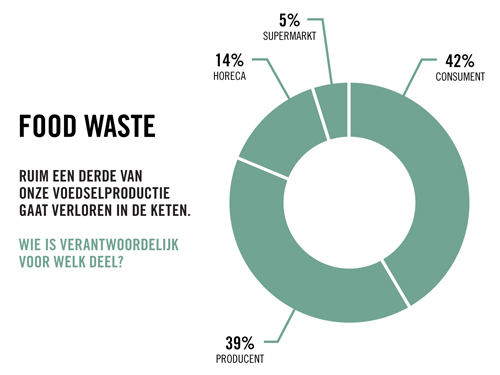
One-third of all our food is wasted. ‘We want to combat food waste and create awareness for the subject. We do this with our restaurant. And we also hope to contribute to raise awareness about food waste, in a fun and positive way! Because food is for you to enjoy. Over the past decades we took more and more distance from our food. We don’t need make a lot of effort, we have many choice, and food is plentiful in our western society. We hope to bring food closer. For example trough cooking workshops and fun events around food’ (Instock).

Food-Waste-Projectie

Instock

In the morning the ‘food rescue team’ of Instock passes by Albert Heijn strores in Amsterdam with their electric cars. Overthere they pick up food, that can no longer be sold. These products are by the way never beyond the date; it is for example bread from one day old or a of oranges that has one bad in it but the rest is still fine. At Instock guest are surprised with an ever- changing menu of inventive and tasty dishes.

Another post about the reeconomy will follow.


relaxing fabrics

0910culdesiree

Desiree van der Gracht

Due to the fast pace of the modern life, we are in an active mode most of the time. Many people find it hard to relax when they get home after a busy day. For them Desiree van der Gracht designed this breathable fabric module.

The module consists of three elements: an airbag that mimics breathing, mood lighting and a control unit. These are all integrated into a specially designed textile fabric. The module can be incorporated into various interior products like a cocoon chair, a room divider or even an entire room.


‘Clouds, fire and waves are natural, calming phenomena. I tried to mimic this with a soft fabric that imitates a breathing moment and changes color when you touch her’ (vanderGracht).


In the future, Desiree sees oppurtunities to apply the concept also in for example, health care, hotels or offices.

original_518888_cfqggauifrtsgadwj8vk4nsey-2

Agatha Nowak

Another example is Agatha Nowak’s offline chair. She designed this seed in order to break trough the mobile habits. Nowadays we spend more and more time looking at the screen of our phones. I have to admit that I also do that. We want to know everything and particular not miss anything The chair creates a space which enables you to relax and you won’t get disturbed by your mobile phone. You need to store the phone in a special pocket on the seat. This bag will block mobile signals and also WIFI. In this way, you won’t receive any new messages and you can’t be disturbed.

original_518888_bbjhcnzkqg_uqucaqvmsybfkz

Agatha Nowak


.

HIV heroes

out-wrap_0.jpg

Vakgardist


Austrian magazine, Vangardist asks attention for HIV in a special way. In order to print the latest edition they have used the blood of three HIV patients. The sterilized blood containing the virus was used in three thousand from the eighteen thousand magazines and was intended to convey the attention to the dailiy stigma of people with HIV.

vangardist-magazine

The journal is of course completely safe to use. Researchers from Harvard and the University of Innsbruch accompanied the magazine during production. The issue features articles on the history of the stigmatization of HIV patients and how the disease exists today and interviews with the three blood donors. The procees will be donated to charities that are involved with HIV and AIDS.

Blood-printed-HIV_Vangardist-magazine_dezeen_468_1

Julian Wiehl explains to Vice: ‘We wanted to not only bring HIV to the attention, but also the fact that people who are infected with it, are still very stigmatized in our society. The problem is not that HIV never made the news, but nowadays it does not happen anymore. Everyone seems to think that whe heard enough about it, but the response shows in our magazine that there is still much to be gained. Unfairtunately, it is not enough to write about it’.

Imagine yourself in a rainforest while switching airplanes

Two years ago, I went to Bali and had a stopover at Kuala Lumpur airport in Malaysia for 6 hours. After walking around and searching for my next flight I still had 5 hours free time. My sister told me that she had it very cold at the airport in China so I was wearing a sweater, but it was more the opposite! I’d tried to sleep at small benches but it didn’t worked out. After a while I got bored and walked along a large window. Behind that window I saw trees and I found a door. When I walked trough that door I came into a kind of tropical rainforest look a like. It was nice to imagine you somewhere else!!

Bali2.

A few weeks ago I found a signal on the internet and immediate I had to think about Kuala Lumpur airport again.

Singaport airport is getting a ‘Bio Dome’, they are building a large indoor park, called/named: ‘Forest Valley’. The air hub is the sixth busiest international airport in the world (architizer.com). Thousands of people have to wait and feel like wasting time before they have their next flight. With Forest valley they ensure that waiting will become a lot more enjoyable.

image_3_aerial_.1aebd122429.original
 The ‘Jewel Changi Airport’ is designed by Moshe Safdie, he is well known for combining nature with architecture and ‘he is still creating innovative large scale urban projects around the world to this day’ (architizer.com).

For the airport, he designed a glass dome, which will encompass a space of 134,000 square meters, and it looks a bit like a science fiction building. In the Forest valley they have different gardens and (walking) trails. In the middle of there is the big eye cather, a 130 – foot – high waterfall called ”Rain Vortex” and at night it is illuminated with light and music is playing.

f6cbf2cdf65991e9b3d094a5a4ba8428

Behind the glass they will have hotels, shops and restaurants. The dome is connected with the three terminals from the airport. The project will be finished in 2018.

I think this project is a great example for other airports. When you get of an airplaine you really want to get some fresh air and now you can!
It’s for instance way more effective for people that want to work while waiting for their next plane they have to catch. Trough the fresh air they feel more energetic and it makes their journey more pleasant.

Safdie-Architects-Changi-Airport-Singapore_dezeen_468_6_1000

Slide 1


Sites:

Moshe Safdie’s huge greenhouse for Singapore’s Changi airport gets underway


http://architizer.com/blog/inside-moshe-safdies-real-life-bio-dome/
http://www.madpac.nl/intel/jewel-changi-airport-singapore-adembenemend/

Bicycle Friendliness

Like Amsterdam, Copenhagen is a city with an extensive cycling network.
Discovering a city by bike is nice, it gives you a certain freedom. For me it looked like they cycled so much faster than me and my classmates, but the Danish think the same about the cyclists in Amsterdam. In a strange city you always have to figure out the road you need to take and in your own city you don’t even have to think about how to ride to work.

Copenhagen is very innovative in the field of cycling.

For example, the green wave. The first green wave for cyclists was established back in 2007. Since then, the concept has spread further throughout the rest of Copenhagen. ‘The idea is simple. Coordinate the traffic lights for cyclists so that if they ride at a speed of 20 km/h, they will hit green lights all the way into the city in the morning rush hour’ (copenhagenize.com)

Schermafbeelding 2015-04-12 om 22.42.31

On average, bicycle users in Copenhagen cycle about 16km/h. A wave of 20 km/h stimulates some cyclists to drive up their speed, while others take up a slower pace in order to benefit from the green lights.

Copenhagen is a city with the ambitious goal to be the first CO2 neutral ‘capital of the world’, in 2025. The Green Wave 2.0 was launched in 2013. Currently, version 2.0 is in its testphase. It has sensors that are able to register a group if citizens riding together. At the intersection that they’re approaching the lights will be kept on green a little longer.

The Green Wave is not the only initiative for cyclists in Copenhagen. At a number of intersections, footrests and railings have appeared, taking away the irritation of having to hop off the saddle or put a foot down while waiting for the light to change. In addition, all over the city garbage cans have been placed so that cyclists can throw the trash while cycling.

Photo: Zepha de Roo

cph_tilted-bin_cyklistforbundet-mikkel_ostergaard

On June 29, Copenhagen launched the bicycle snake or ‘cykelslangen’, an iconic and important logistical mobility link. The long bridge connects two parts of the city with a 220 meter long bypass road and is exclusively for cyclists and pedestrians. Everyone in Copenhagen is very excited about the snake. It is a classic Danish design and has a functional, practical value.

Schermafbeelding 2015-04-12 om 22.57.40

Outcomes
Copenhagen is Europe’s safest capital. The percentage of accidents involving cyclists remains low due to the innovations. There is no orange in the traffic lights and red is really red there. In the Netherlands we sometimes cycle trough red, but in Copenhagen it rarely happens.

It also has financial benefits:

– The cost of 1km of cycle track is paid off in five years by the health benefits of users getting more exercise.
– Car traffic drops by 10% on these stretches and cycling increases by 20%.
– The 41% of the population who arrive at work or school by bike contribute a whopping €235m (£185m) a year to the public coffers.
-Re-allocating space from less cost-efficient transport forms like cars to modern, cost-effective bicycles makes sense.
(link)
– The number of CO2 emissions is reduced.

In Holland, we are also innovative in the field of cycling. For instance, the hovering bike roundabout in Eindhoven.  Cyclists can ride completely seperated from the motorized traffic by cycling on an extra ring above the intersection.

Links:
http://www.copenhagenize.com/2014/08/the-green-waves-of-copenhagen.html
http://www.theguardian.com/cities/2014/oct/16/copenhagen-cycling-innovation-lycra-louts-green-wave-bike-bridges

photo’s
http://www.sharingcopenhagen.dk/media/215017/16-groen-boelge.jpg http://static01.nyt.com/images/2014/12/09/business/copenhagen2/copenhagen2-articleLarge.jpg
http://cdn3.gbtimes.com/cdn/farfuture/28EsI7lzpydiQZOiFRhggXQ6hwPVY6wASy8xVulB-w/mtime:1398156987/sites/default/files/styles/1280_wide/public/2014/04/22/cph_tilted-bin_cyklistforbundet-mikkel_ostergaard.jpg?itok=XuVF7W6O

http://www.dac.dk/Images/img/1920x1200M/(50713)/50713/cykelslangen-08.jpg
http://www.designdiffusion.com/wp-content/uploads/2014/09/IMG_9033.jpg

Random acts of kindness

Two weeks ago I went on a studytrip to Copenhagen. I had really been looking forward to visiting this city. The first two days were marked by an assignment that we had to do for Fflink.

Fflink is a social movement in Copenhagen. Fflink refers to Fucking Flink. Flink represents Friendliness, and Fucking is used to catch peoples attention. Not only do they want to make Denmark the happiest country in the world, but also the friendliest.

The movement Fflink
The social movement was founded in 2010 by Lars AP. He noticed a difference in his behaviour/friendliness because of his identification with two different backgrounds; American and Danish. Fucking Flink has a hyperactive Facebook page with more than 170,000 followers. Its online community is the largest in Denmark. On the Fucking Flink Facebook page followers share their stories about random acts of friendliness of both small and large scale.

His question: ‘Why am I happier when I speak the other language than the language of the happiest people on eart’, occurred to him. ‘My happiness has much to do with how I communicate with someone’. The aim is to change our value focus through social innovation. Fflink creates little signs of a better world and creates questions about people’s daily routine. The team of Fflink works full time to spread kindness, this includes organizing workshops for students and companies.

Fflink also tries to raise the awareness of people on the streets with ‘random acts of kindness’ and signs of a better world. Below you can find a video with an example. It’s in Danish but without understanding the language you can guess what it is about.

In the video Lars is playing a parking attendant. Instead of handing out fines if people break the law, he gives drivers who parked well, money. First people look irritated. But once they see what is on the receipt, they are surprised and happy. When you give something to people, they want to give something back. The parking attendant receives several presents from the people.

In the next video you see a test on who is willing to tie someone’s lace. Some people walk over quickly, others stop and help him.

This reminded me of a movie I encountered earlier on Facebook.
When are people willing to help? This video sets people thinking about their own behaviour.

The next days in Copenhagen I ran into several signals without searching for them.

For example, this picture:

DSC_0023

‘Blågård skole is paying it forward, do you? If you do take one of these rip off flyers and you are allready paying it forward. And please don’t forget to smile’’. On the rip off flyers they wrote:  – Take a selfie with the next person you see – Give a compliment to the next person you see.

During our biking tour around Copenhagen we found this sign by an urban garden: ”Welcome to BYHAVEN 2200, everybody’s garden. Please be kind to the plants and look after your dog & garbage, enjoy!!

foto 4

With kindness you achieve so much more:) If you are open to it, you can find it in the little things.  But sometimes you need something or someone to wake you up or reminds you.
DSC_0068 kopieFor this blog, I’ve used my own photos. 

Cream, Cakes and Paper Chains

foto 1 kopie 3

With my mom, dad and sister I went to Rotterdam last Saturday to celebrate my birthday.

Initially I wanted to visit a city in the Netherlands that I had never seen before, but I was also looking for a nice exposition or event. The exposition Cream, Cakes and Paper Chains, the Netherlands in a hundred birthdays’, catched my eye. So eventually I decided to go to the city I have also talked about in my previous post, Rotterdam!

This slideshow requires JavaScript.

You can visit the exhibition in ‘The Netherlands fotomuseum’, but you have to be quick because it runs until the 11th of january. With this exhibition, photographer Ilvy Njokiktjien gives us an insight into the customs and habits of various Dutch families. Ilvy pictured all kind of birthdays ranging from a first birthday to a hundredth. This exhibition evokes feelings of recognition or even of amazement. She not only showed different birthdays but also different cultures, poor and rich people, birthdays that you would expect or rather exceptional birthdays.

I found out that the way they exhibited the pictures is very important. They didn’t place all the pictures on the wall, but only three pictures. It was a small exhibition with four big television screens. That showed all pictures one by one. You could sit down or just stand and watch. To me it was a welcome change from walking along the art pieces. It made it easier to focus on all the photos.

In April 2013, Stichting Fotoweek (Photo Week Foundation, an initiative of the Nederlands Fotomuseum and Foam) proclaimed Njiokiktjien the first Photographer Laureate of the Netherlands. Fotoweek commissioned her to create a photo series based on the theme of ‘Look! My family’. She opted to depict the phenomenon of birthday parties, a moment that brings many families together. This series, consisting of ten birthdays, was on show at photographic festivals such as Noorderlicht during Fotoweek 2013. (Nederlands fotomuseum.nl)

There were a few photos that I could identify myself with.

054 WILLEM VAN HOOFT FINAL 001

The one on the beach. When I was young we always used to go to my grandfather’s cottage in Zeeland to celebrate his birthday over there.

Schermafbeelding 2015-01-07 om 20.05.45 And also these two, the rice cakes and fruit tarts were familiar to me. I didn’t like these. My mom always makes the best cakes so maybe I’m a bit spoiled in that sense.

Schermafbeelding 2015-01-07 om 20.13.03

When I saw this picture I’m not really sure what I felt. This kid suffers from the aging disease progeria. I was really happy for him that they made it possible to do the normal things other kids from his age also do. ‘I just want to participate’. You could read the stories behind all the photos on cards.

slagroomtaart-en-slingers-3

I think this is a recognizable photo to a big group of people. We always celebrated the birthdays of my teachers at primary school. Every kid in the class made something nice or with a few kids they prepared a short play or song. And I think it was the same at other schools in the Netherlands.

So on my birthday I visited an exhibition about birthdays, how nice could it be!

We also visited the permanent presentation about the Dutch photography history, ‘The Dark Room’.

Schermafbeelding 2015-01-07 om 20.27.24

With this exhibition, they also used experience to make it an attractive exhibition and it worked for me. They actually recreated a dark room where you can develop photos. Formerly they always used the dark room but now we have many more options. In the room there where around twenty tables with developing trays on it. You had to pick a photographic paper and place it in the trays to start various films. This made it very attractive to watch!

Schermafbeelding 2015-01-07 om 20.26.15

After the museum we had lunch at Hotel New York.

This hotel is settled in the former head office of the Holland Amerika Lijn. This is the place where from 1873 to1978 thousands of people headed to North Amerika in the hope for a better life. I thought it was a beautiful restaurant, with a great view of the harbour. And we really enjoyed the food! For students it’s expensive but definitely a good place to visit on my birthday with my parents who paid the bill! I really liked their interior, the sense of nostalgia is everywhere!

foto 5

I hope you enjoyed reading my blog and when you visit Rotterdam you definitely have to visit these places!

X Eline

Another part of Rotterdam

Hello there!

It has been a while ago that I wrote something, but we had vacation and I was busy with a lot of other things.

Now school has started for three weeks and I’m going to try writing again on my blog.

Three weeks ago on a Wednesday, I went to Rotterdam with school. My school is in the city Tilburg, but three years ago I went to school in Rotterdam for a year. I used to study Lifestyle & Design at the Willem de Kooning Academy. After my propedeuse diploma I made the choise to take a gap year, and now I started my second year International Lifestyle Studies at Fontys Academy (for Creative Industries).

During my year in Rotterdam I didn’t saw that much of the city. My school happened to be in Blaak, and I don’t really like the buildings overthere. I knew there were some nice places in Rotterdam but sadly I never got to see them. In a book which I had to learn for an exam last year, I read about a building called ‘Schieblock Rotterdam’, so I went to visit it with two  girls from school.

foto 2

At the bottom of the building, they set up a rooftop pavillion with a small restaurant that included food from their own vegetable garden. Each floor also has about 10 companies like designers, moviemakers, architects etc.

One of the companies is called ZUS (Zones Urbaines Sensibles). ‘ZUS works with a belief that every place has the potential to become unique and thrilling’.
One of their projects was ‘I make Rotterdam’. It’s a project of the 5th International Architecture Biennale Rotterdam (IABR) and ZUS. Making City is an appeal and argument to give architecture and urban planning a more central place in the making of a city or society.

foto 2 kopie

foto 3 kopie

They build the ‘Luchtsingel’ (a wooden footbridge of 390 meters linking Rotterdam Centre with North). For the construction 17,000 planks are needed. Anyone can participate by sponsoring planks.

foto 5 foto 4 kopie foto 1

This was my article for today

When you are going to visit Rotterdam you really have to go there:)

XX

Eline