

(Jantje Beton)
Do you remember the times when you went from door to door to sell lottery tickets for your sports club? I always skipped some houses from which I knew that they would slam the door in front of my face or never donate money and at others I found it fun to go to because of the piece of candy I often got there. My parents are both collectors and once a year they go from door to door to raise money for the ‘dutch heart foundation’ and the ‘skin burn foundation’. They note that less donations have been given every year, probably because of de reduce of small money that people keep in their pockets.|
I irritate myself often for students who come to the doors or waiting in front of train stations to raise money, they work for big companies such as ‘pepper minds’ and make lots of money with it, while they exchange charities everytime they have to work. I never get the impression as if they really stand behind the charity. I usually end up by writing my bankaccount because I think it’s difficult to say no. But it’s simply not possible to support every charity and that’s why I only want to support foundations which I consider as important. Persuade people to donate money would never by my cup of tea.
I think it’s important to create awareness and to anticipate on social control. You have to face them with social problems, create the guiltiness and the way of approach has a major impact. Once people are unpleasant or won’t tell a good story I will donate less. Another thing, it should be easy for people to donate. And finally we usually would like something in return if we donate, like a gift, or to show others that you are doing a good job and to have a better karma. I want to share some social campaigns with you from which I think they have a good approach.
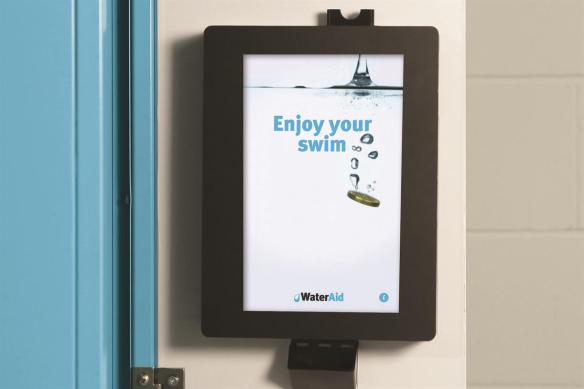
Hope Locker
When you go swimming, you probably should always have a coin with you for the lockers. And you will always get it back at the end. But now you can also omit the coin.
For example Agency Proximity Londen came with a new Idea. For their charitable customer WaterAid, they wanted to create awareness and obtain donations. To make the goal relevant to the audience and create a donation option, the agency put the focus on the swimming and fitness industry. A place where people are constantly using water; they swim in it. Therefor she developed, together with MediaMonks, the Hope Locker.
The Hope Locker is a locker just like any other in gyms or pools. Here, you also insert a coin to safely store your clothes. However, this system has been made more interactive and sets in a message after your swim. The report responds to the amout of water you’ve swallowed, it’s probably an experience you’d rather forget if it’s happened to you. ‘But it might just make you think about what life is like when you have no choice about the water you drink – which is were the Hope Locker comes from’ (Wateraid). The report will ask you at the end if you’d like to donate it to WaterAid.
Because of the small amount everytime and the and the guilt that they generate, people will donate faster.
A table to end hunger
In Australia, an organization has started with a clever charitable concept. In Australia it’s in the weekends almost impossible to book a table at a restaurant, simply because the demand is too great. Not a first world problem to mention when compared with the 795 million people that are suffering from hunger around the world. Therefore McCann Sydney came with ‘A table to End Hunger’. A concept in collaboration with E-bay where tables were auctioned among interested parties. All proceeds from the auction will be donated to banish the hunger in the world by 2030.
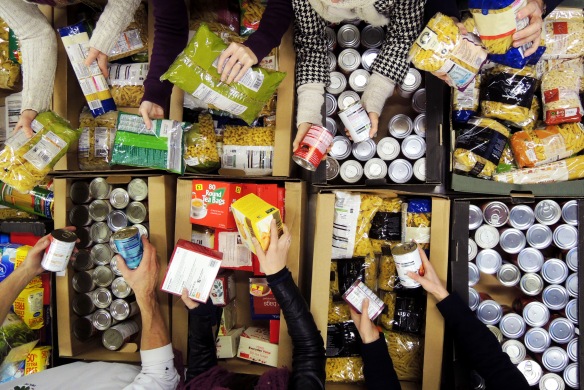
MEANS online food bank
MEANS was started with the blief it should be easy for those with excess food to share it with those in need. It didn’t take long to find people who agreed.
MEANS is a web-based, searchable database that lets member food pantries and suppliers share information about whether they need specific products or have an excess of products so that pantries can make better use of resources and avoid waste.’They are now in 42 states and counting, helping divert food from the trash to local emergency feeding services with the ease and speed of the internet’ (MEANS).
MEANS works as following; the donors can simply post what food they want to donate to instanly connect with food distributors in their area and the food banks and pantries get real-time notifications on food donations and can claim what works for them. If they can’t pick up something or don’t won’t it they can just ignore the alert.
 elinesmits