Many companies around the world are on board with the concept of waste reduction, reuse and recycling. The challenge is to take the foundational ‘three Rs’ to the next level.
By designing products smarter, extend it’s life and parts to be used again, the circular economy makes an important contribution to the future-making of the Dutch economy.
‘The circular economy is the oxygen of the 21st century. Without oxygen you can not live, and the same goes for the circular economy. We will not have a choice soon, without resources, we have no prosperity, ‘ said Ed Nijpels, chairman of the Commision of Sustainable Development.
The demand for raw materials over the past century has boomed; the world’s population started to use 34 times more materials, 27 times more minerals, 12 time more fossil fuels and 3.6 times more biomas. This process is not tenable. A combination of a rising commodity demand for a growing world population, geopolitical tensions in the mining areas, dining capacity of the eart and rapid technological developments (including robotics) increases the need for more efficient use of raw materials to go.
By circular entrepreneurship, factors that are dependent on primary commidities, have been made future proof and new economic activites has emerged.
In all sectors, companies have started with the circular entrepeneurship and a large number of different initiatives are developed.
Instock
INSTOCK
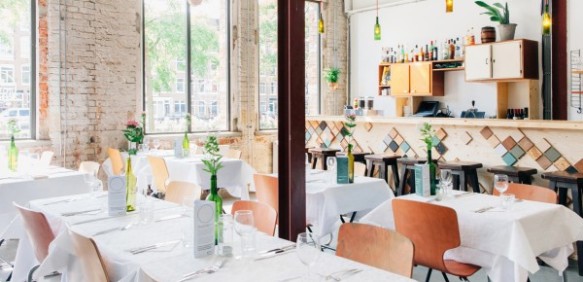
Instock was a pop-up restaurant where chefs will cook for five months with food that normally does not reach our plate. Because of the succes it opened it’s permanent locations.
Their mission? To reduce food waste! Selma, Merel, Bart and Freke met each at other at the Albert Heijn, one of supermarkets in the Netherlands. They became seperately interested in food waste with INSTOCK foundation as a result.
The first project was pop- up restaurant INSTOCK at the Westergasterrein. The chefs use disapproved food and show that what would otherwise be discarded, is actually fantastic food. For €22,50 you can eat three courses. The procees will be used to support food related projects.
Instock
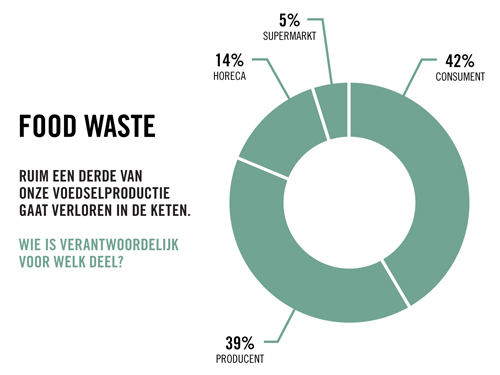
One-third of all our food is wasted. ‘We want to combat food waste and create awareness for the subject. We do this with our restaurant. And we also hope to contribute to raise awareness about food waste, in a fun and positive way! Because food is for you to enjoy. Over the past decades we took more and more distance from our food. We don’t need make a lot of effort, we have many choice, and food is plentiful in our western society. We hope to bring food closer. For example trough cooking workshops and fun events around food’ (Instock).
Instock
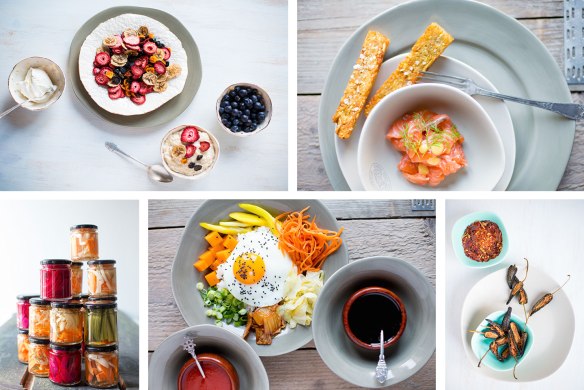
In the morning the ‘food rescue team’ of Instock passes by Albert Heijn strores in Amsterdam with their electric cars. Overthere they pick up food, that can no longer be sold. These products are by the way never beyond the date; it is for example bread from one day old or a of oranges that has one bad in it but the rest is still fine. At Instock guest are surprised with an ever- changing menu of inventive and tasty dishes.
Another post about the reeconomy will follow.



 elinesmits